Private Plane Hire: Turboprop or Jet
Private plane hire starts with the aircraft class, not the cabin. A turboprop runs $2,200–$3,500 an hour and a light jet $3,800–$5,800, per our 2026 data. That gap decides short routes.
- Start
- Private plane hire
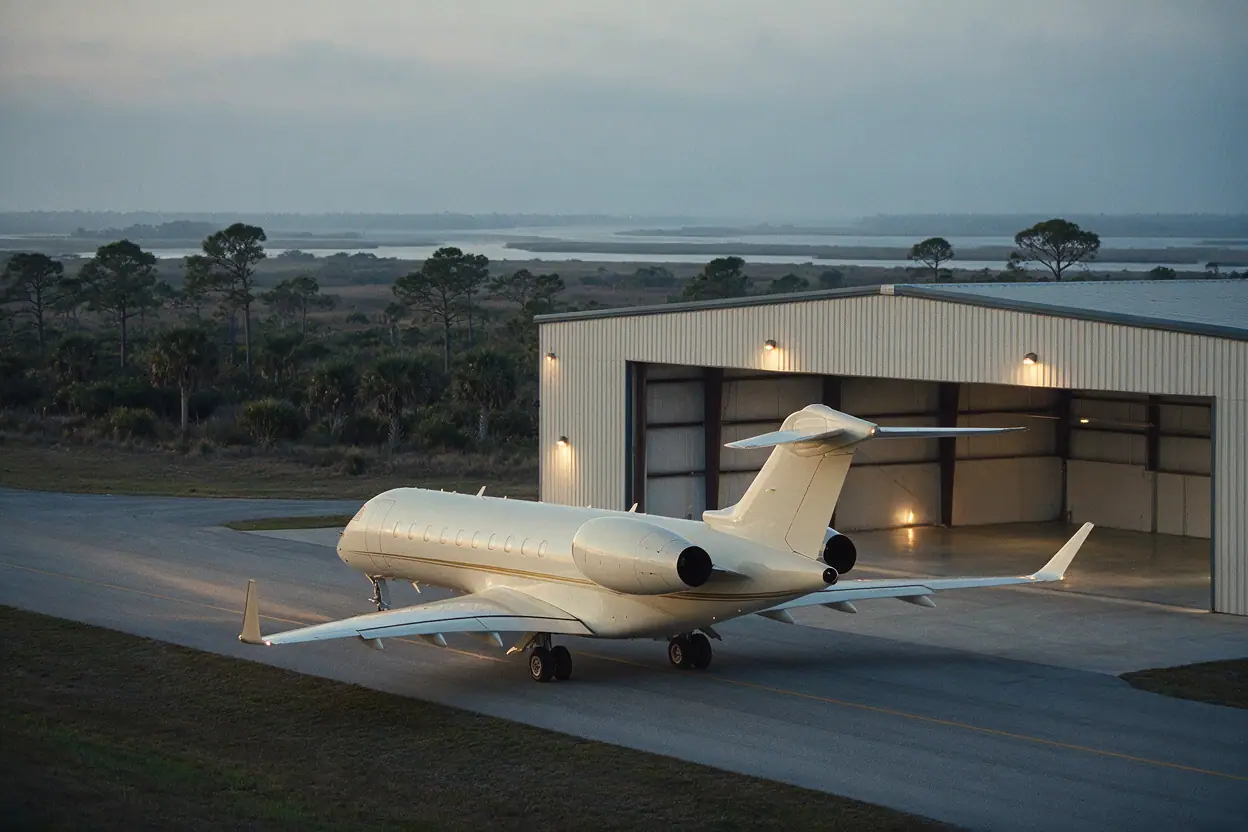
For a short private plane hire, the turboprop usually wins on cost. A Beechcraft King Air 350i seats 8 and burns less fuel than a light jet, so the hourly rate stays lower. On a 158 nm hop from New York to Boston, the table below shows a turboprop at 0h 51m and $2,200–$3,500 one-way, against a light jet at 0h 41m and $4,000–$6,000. That is a 10-minute difference for thousands of dollars. If the trip is under about an hour of flying, then the turboprop is the practical choice for most groups.
As the route stretches, the math flips. A jet cruises at 430–470 knots against the turboprop’s 300 knots, so a 949 nm New York to Miami run takes 2h 37m in a light jet and 3h 37m in a turboprop. The turboprop saves money but adds an hour each way. For a day hire where you need to be back the same evening, that extra hour matters. The right aircraft class is the one that fits the distance and the schedule, not the one with the lowest hourly rate.
Turboprop vs light jet for hire
Turboprop
- Hourly rate from $2,200 to $3,500
- Cruise speed around 300 knots
- Typical range near 1,500 nm
- 6 to 8 passengers, good for short runways
Light jet
- Hourly rate from $3,800 to $5,800
- Cruise speed around 430 knots
- Typical range near 1,400 nm
- 4 to 7 passengers, faster on longer legs
When a turboprop fits private plane hire
A turboprop suits a private plane hire when the flight is under about 400 nm and the group is 6 to 8 people. The Beechcraft King Air 350i seats 8 passengers and cruises at 312 knots on short routes. On the 199 nm Los Angeles to Las Vegas route, the table shows a turboprop at 1h 00m and $2,200–$3,500 one-way, while a light jet takes 0h 47m at $4,000–$6,000. That is 13 minutes for roughly double the price, so for a quick hop, the turboprop is the budget-friendly aircraft. If you are flying into a smaller general aviation airport with a short runway, then the turboprop’s lower approach speed can open more options. The FAA sets the operating rules for these flights, and a turboprop still needs a qualified crew and a maintained aircraft.
The trade-off is cabin size and speed. A turboprop cabin is about 4 ft 9 in tall in the King Air 350i, which is fine for an hour but tight on a longer leg. For a 902 nm New York to Palm Beach run, the turboprop takes 3h 27m and $7,500–$12,000, against a light jet at 2h 30m and $9,500–$14,500. That is nearly an hour more in the air. If the schedule includes a meeting the same day, then the jet’s speed pays for itself. For leisure trips with flexible timing, the turboprop keeps the private plane hire cost down.
Turboprop and light jet routes
The table below compares turboprop and light jet flight times and one-way estimates on seven routes, based on our 2026 route data. On New York to Miami, a turboprop takes 3h 37m and $8,000–$12,500, while a light jet takes 2h 37m and $10,000–$15,000. That pattern holds on short hops: the turboprop saves money, the jet saves time. Use the figures to see where the gap is small enough that the jet’s speed is worth the cost.
| Route | Distance | Turboprop | Light jet |
|---|---|---|---|
| New York to Miami | 949 nm | 3h 37m · $8,000–$12,500 | 2h 37m · $10,000–$15,000 |
| Los Angeles to Las Vegas | 199 nm | 1h 00m · $2,200–$3,500 | 0h 47m · $4,000–$6,000 |
| New York to Palm Beach | 902 nm | 3h 27m · $7,500–$12,000 | 2h 30m · $9,500–$14,500 |
| Los Angeles to San Francisco | 279 nm | 1h 17m · $3,000–$4,500 | 0h 59m · $4,000–$6,000 |
| New York to Boston | 158 nm | 0h 51m · $2,200–$3,500 | 0h 41m · $4,000–$6,000 |
| Washington, DC to New York | 194 nm | 0h 59m · $2,200–$3,500 | 0h 46m · $4,000–$6,000 |
| Los Angeles to Cabo San Lucas | 808 nm | 3h 08m · $7,000–$11,000 | 2h 16m · $8,500–$13,000 |
Flight time and one-way estimate per aircraft class.
Jet charter for longer routes and groups
A jet charter makes sense when the route is over about 500 nm or the group needs more cabin space. A light jet cruises near 430 knots and covers 1,400 nm, cutting a 949 nm trip to 2h 37m. The Cessna Citation Latitude, a midsize jet, seats 9 and has a 6 ft tall cabin, which is a different experience from a turboprop. For a 2,129 nm New York to Los Angeles flight, a light jet needs a fuel stop because its range is shorter than the route; a super-midsize or heavy jet covers it nonstop. If you are comparing quotes, then check the aircraft’s range against the route distance before you look at the price. The table below shows turboprop and light jet times and costs for seven common routes.
For larger groups, a heavy jet like the Gulfstream G450 seats 14 and has a 4,350 nm range. That class runs $9,500–$14,500 an hour, so it fits a full family or a team, not a couple. On shorter routes, the hourly rate dominates the total, so a midsize jet at $5,200–$7,800 an hour is often the middle ground. If the trip is a one-way charter, then the operator may add a positioning cost to bring the aircraft to your airport; ask for that line separately. Prices are estimates until an operator confirms them.
Airports and density altitude
Airport choice affects both cost and performance on a private plane hire. Centennial Airport near Denver sits at 5,885 ft elevation, where the July density altitude reaches 9,200 ft. High density altitude reduces aircraft performance, so a turboprop or light jet may face weight limits on a hot day. If you are flying from a mountain airport in summer, then a longer runway or a larger aircraft class can be the difference between a full group and a fuel stop. The FAA publishes density altitude guidance, and pilots calculate it before departure.
For international legs, CBP clearance is part of the plan, so build in time at the arrival airport. For domestic flights, the FBO handles the departure, and you avoid the TSA screening lines at a commercial terminal. If your group is flying into Teterboro, then the four FBOs there give you options for drop-off and pickup. The airport you choose should match the aircraft class and the runway length; a 4,897 ft runway at McClellan-Palomar is fine for a light jet but not for a heavy one.
Estimate your cost
Choose a route, travelers and bags to see the matching class, time in the air and an estimated price range.
More private jet hire guides
Large-cabin jet hire
Luxury private jet hire with heavy jet hourly estimates from $9,500 to $14,500. See real 2026 ranges and what a large cabin adds for groups of 10 to 14.
How to hire a private jet
How to hire a private jet: steps from enquiry to boarding, crew included, with estimates from $2,200 an hour. Planning figures until an operator confirms.
Private jet hire cost
Private jet hire cost for 2026: hourly rates by class from $2,200 to $14,500, plus the 7.5% federal excise tax. Estimates until an operator confirms.
FAQ
How much does a 2 hour private flight cost?
A 2 hour flight in a light jet runs about $7,600–$11,600 at $3,800–$5,800 an hour, before positioning. A turboprop at $2,200–$3,500 an hour comes to roughly $4,400–$7,000. On a specific route, the table above shows a 158 nm New York to Boston light jet at $4,000–$6,000 one-way. These are estimates until an operator confirms the quote.
How much do private planes usually cost?
Hourly rates by class run from $2,200–$3,500 for a turboprop to $9,500–$14,500 for a heavy jet, per our 2026 data. A midsize jet is $5,200–$7,800 an hour, and a super-midsize is $7,200–$10,000. The total for a trip depends on flight time, route distance, and any positioning cost. Prices are estimates until an operator confirms them.
What is the most affordable way to fly privately?
A turboprop on a short route is the most affordable private plane hire. The table shows a 199 nm Los Angeles to Las Vegas turboprop at $2,200–$3,500 one-way, against a light jet at $4,000–$6,000. For groups of 6 to 8 on flights under about 400 nm, the turboprop keeps the hourly rate low. Booking a one-way charter and avoiding empty-leg positioning can also reduce the total. Prices are estimates until confirmed.
How much does private jet rent cost?
Private jet hire costs $3,800–$5,800 an hour for a light jet and $5,200–$7,800 for a midsize, based on our 2026 data. A 949 nm New York to Miami light jet is $10,000–$15,000 one-way. The hourly rate covers aircraft and crew, but positioning and airport fees may add to the quote. Ask for a breakdown before you book, and treat all figures as estimates until an operator confirms.
Is a turboprop cheaper than a jet for private plane hire?
Yes, a turboprop is cheaper on short routes: $2,200–$3,500 an hour against $3,800–$5,800 for a light jet. On the 279 nm Los Angeles to San Francisco route, the turboprop is 1h 17m at $3,000–$4,500, and the light jet is 0h 59m at $4,000–$6,000. The jet saves 18 minutes; the turboprop saves money. For a tight schedule, the jet may still be the better value. Prices are estimates until confirmed.
Which airports are used for private plane hire?
Private plane hire uses general aviation airports and FBOs, such as Teterboro, Van Nuys, and Miami-Opa Locka Executive. Each has its own runway length and density altitude: Centennial Airport sits at 5,885 ft elevation. For international arrivals, CBP clearance is required. Pick an airport that fits your aircraft class and runway needs. The FBO handles the departure, so you skip the commercial terminal. Confirm the FBO and fees in the quote.